Tesla FSD V15 Update and the Shift Toward Autonomous Driving Subscriptions
Tesla has launched the FSD V15 update with enhanced perception capabilities, amid a broader industry trend of transitioning autonomous driving features to monthly subscription models.
Tesla FSD V15 Enhances Perception and Safety
Tesla has released the FSD V15 update, focusing on significant improvements in environmental perception. The new version enhances the detection of traffic signs, small animals, and various road obstacles. Notably, the system can now better identify potholes and deep water puddles to facilitate avoidance maneuvers. Tesla claims that the requirement for driver intervention in safety-critical situations has improved by 25 times. However, the company has not disclosed the specific methodology used to calculate this 25-fold improvement. Consequently, it remains unclear how this statistical advancement will translate into practical, everyday driving experiences for the average user on the road.
New Visualization and User Interface Features
A standout feature of the V15 update is the Tesla Reality View, also referred to as Tesla Augmented Reality. This system reconstructs the vehicle's surroundings in real-time from a virtual camera perspective, showing how the FSD perceives its environment. By integrating various model signals into a single end-to-end visualization, the system requires less computational power. Drivers can choose between full-screen, map, or split-screen views. Additionally, the update introduces a silent mode to reduce cabin notifications and integrates upcoming turns directly into the driving visualization. Users can switch between the map and Reality View using simple screen swipe gestures.
Personalized Driving and Intelligent Navigation
The V15 update introduces intelligent learning models for navigation and driving profiles. Tesla is transitioning to a model that utilizes route preferences gathered from its fleet to provide more personalized navigation. Initially, the system learns preferences regarding trip start and end points, with plans to expand this capability to the entire journey in future updates. Parking selection also benefits from this, as the system will consider a driver's historical parking preferences. Furthermore, the driver monitoring system has been updated to allow camera-based attention tracking to function more effectively even when the driver is wearing hats or sunglasses.
AI-Powered Safety During Manual Driving
Tesla has introduced an Automatic Collision Avoidance feature that activates even when the driver is operating the vehicle manually. This system utilizes FSD artificial intelligence to intervene during unavoidable frontal collisions or instances of loss of control. In scenarios where maneuvering around an obstacle is safer than standard braking, the system can initiate a lane change to avoid the hazard. To utilize this, an active FSD package is required. During emergency maneuvers, the system desensitizes the accelerator pedal to prevent panic reactions. To override the system, the driver must apply a firm and decisive force to the steering wheel.
The Shift Toward Autonomous Subscriptions
Automobile manufacturers are increasingly moving toward monthly subscription models for driver assistance and autonomous driving features. Tesla requires a 99 dollar monthly fee for its FSD software, having significantly reduced one-time purchase options. Other industry players are following suit; Rivian offers a service for 49.99 dollars monthly, while GM's Super Cruise is expected to generate significant revenue through its subscription model. Lucid is also preparing to launch a similar system. While manufacturers view this as a vital revenue stream to offset high investment costs, consumers have expressed frustration over paying recurring fees for features already integrated into their vehicles.
Industry Criticisms and Future Outlook
Industry experts have criticized the trend of shifting hardware-based features to software subscriptions. Some analysts suggest that manufacturers are prioritizing shareholder expectations for aggressive autonomous visions over consumer value. Currently, most existing systems are classified as Level 2, meaning the driver remains fully responsible for the vehicle. While Tesla, Rivian, and Lucid aim for systems capable of operating on all roads, competitors like Ford and GM currently limit their advanced features to mapped highways. The ultimate industry goal remains the development of Level 3 systems that allow drivers to divert their attention, though this remains a future milestone.
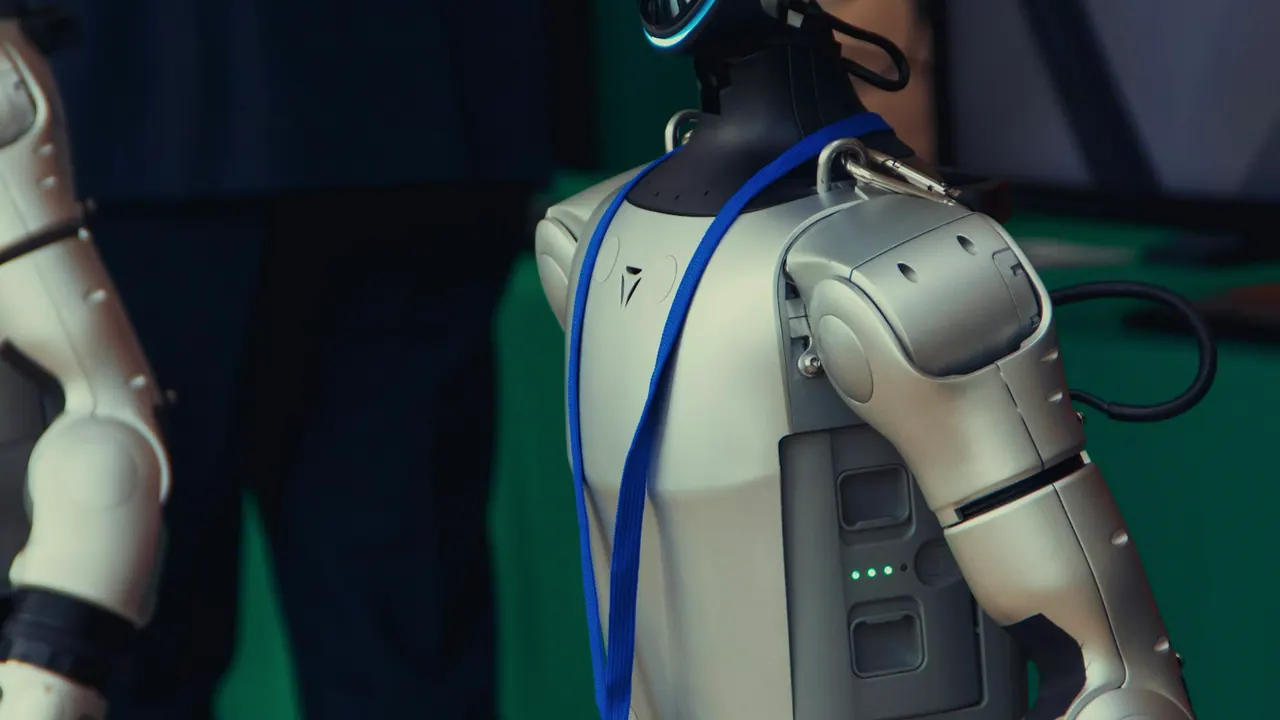
Illustrative news photo · Mikhail Seleznev / Unsplash ↗
Sources and verification
- Reporting / cross-checkHaber.com ↗
- Reporting / cross-checkSon Dakika ↗
- Reporting / cross-checkshiftdelete.net ↗
- Reporting / cross-checkOriginal publisher ↗
Comments
Reader question: In which practical scenario would this technology be useful?
No comments yet. Be the first to contribute.
Write a comment
Perspectives on this story
Discussion examples prepared by the editor.
I am following “Tesla FSD V15 Update and the Shift Toward Autonomous Driving Subscriptions” and would find more clarity on the conditions under which the claim was validated useful. Is there an independent measurement?
To address this, separate observations from assumptions about the conditions under which the claim was validated. A measurable trial would help.
Reading “Tesla FSD V15 Update and the Shift Toward Autonomous Driving Subscriptions” made me think first about defining boundaries for unexpected failures. It deserves attention before interpreting the result.
For me, measurable success criteria for a pilot is the deciding factor. What independent comparison would help beyond the announcement?