Voyager 1 Achieves Historic Milestone by Reaching One Light-Day Distance from Earth
NASA's Voyager 1 has become the first human-made object to reach a distance of one light-day from Earth, currently positioned approximately 16.1 billion miles away.
Reaching the One Light-Day Milestone
NASA's Voyager 1 has achieved a historic milestone by becoming the first human-made object to reach a distance of one light-day from Earth. On November 18, the spacecraft reached a distance of approximately 16.1 billion miles (25.9 billion kilometers). This distance is defined by the time it takes for light to travel, meaning a signal sent from the probe now requires a full 24 hours to reach our planet. Scientists at NASA's Jet Propulsion Laboratory confirmed this achievement by tracking the spacecraft's trajectory and carrier signal. This feat marks a significant moment in human space exploration, demonstrating the incredible scale of the distances our technology can traverse.
Communication Challenges and Technical Issues
The immense distance creates significant operational hurdles for mission controllers. Because signals travel at the speed of light, a single command-response cycle now spans two full days. Furthermore, engineers are currently addressing a technical complication. Since November 14, Voyager 1 has not transmitted scientific or engineering data. While the probe continues to emit a carrier radio signal, the expected data packets are missing. Mission specialists are investigating the cause of this communication gap. Additionally, the spacecraft's plutonium-238 power source continues to degrade annually, which poses long-term challenges for maintaining the probe's functionality in the deep void.
Historical Context and Planetary Exploration
Launched in 1977, Voyager 1 was part of a mission designed to exploit a rare planetary alignment. This allowed the probe to use gravity assists to visit the outer solar system. The mission successfully provided high-resolution images of Jupiter and Saturn, revealing new details about their atmospheres, rings, and moons. Voyager 1 specifically followed a trajectory toward Saturn's moon, Titan, which eventually flung it out of the planetary plane. This journey transformed our understanding of the gas giants and set the stage for future missions, such as the upcoming Dragonfly mission intended to explore Titan's atmosphere in the mid-2030s.
Entering the Interstellar Medium
Voyager 1 has transitioned from planetary exploration to an interstellar expedition. In 2012, it became the first spacecraft to leave the heliosphere, the Sun's protective bubble of magnetic fields and particles. It has since traveled through the interstellar medium, the space between stars. By monitoring changes in the Sun's magnetic field and detecting superheated plasma, the probe provides unique measurements that cannot be collected from Earth. This exploration of the region beyond the solar system's influence offers unprecedented insights into the cosmic environment, making Voyager 1 a central component of NASA's heliophysics research fleet.
The Golden Record and Human Legacy
Beyond its scientific instruments, Voyager 1 carries a profound symbolic message: the Golden Record. This gold-plated copper phonograph record contains sounds and images representing life and cultures on Earth. Designed as a cosmic greeting, the record serves as a time capsule for any advanced extraterrestrial civilization that might encounter it. This inclusion highlights the mission's dual purpose as both a scientific endeavor and a testament to human existence. Even as the spacecraft moves further into the darkness of interstellar space, it carries the essence of our world, acting as a silent ambassador for humanity.
Future Outlook and Mission Longevity
As Voyager 1 approaches its semicentennial anniversary in 2027, its future remains uncertain. While it has survived decades beyond its original mission lifespan, the degradation of its instruments and power supply suggests that the mission may eventually end. Scientists estimate that we might receive the final signals from this distant object within the next decade. Despite these limitations, the Voyager program remains a testament to the exceptional engineering teams who have kept the spacecraft connected to Earth across vast cosmic distances. Its legacy will continue to inspire future generations of explorers to reach for even deeper frontiers.
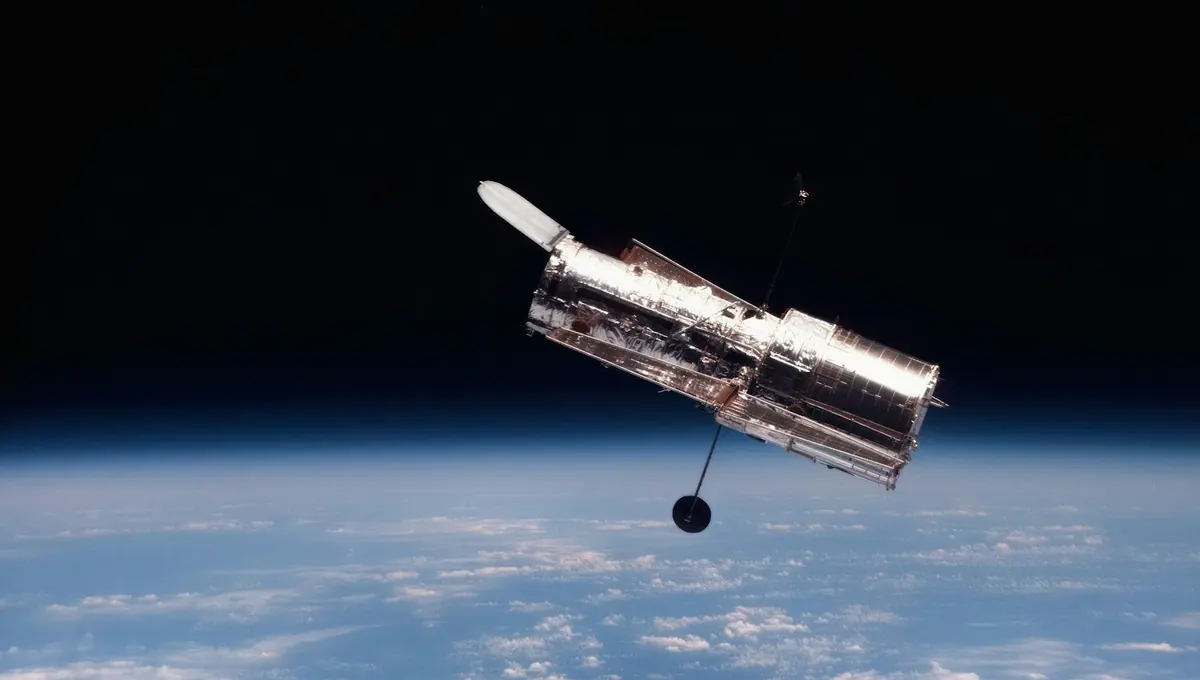
Illustrative news photo · NASA Hubble Space Telescope / Unsplash ↗
Sources and verification
- Reporting / cross-checkScienceDaily Technology ↗
- Reporting / cross-checkSmithsonian Magazine ↗
- Reporting / cross-checkUSA TODAY ↗
Comments
Reader question: Which outcome of this space research matters most to you?
No comments yet. Be the first to contribute.
Write a comment
Perspectives on this story
Discussion examples prepared by the editor.
In “Voyager 1 Achieves Historic Milestone by Reaching One Light-Day Distance from Earth”, I would like more detail about cross-checking an observation with independent data. Which source supports the point?
To address this, separate observations from assumptions about cross-checking an observation with independent data. A measurable trial would help.
I see the upside, but error detection and loss during data transmission may introduce hidden costs. A checklist before adoption would be useful.
If this came up in our team review, I would ask about which instrument made the measurement and how often first. Which changed assumption would reverse the decision?