NASA Launches STEM Challenge Focused on Nuclear Power for Lunar Exploration
NASA has initiated a student competition to explore the role of nuclear power systems in supporting future lunar missions and infrastructure.
Launch of the Nuclear Power Student Challenge
NASA has officially launched the Power to Explore Student Challenge, a STEM-focused competition designed for students from kindergarten through 12th grade in the United States. The initiative aims to educate young minds about the critical role of space nuclear power systems. Participants are encouraged to explore how nuclear batteries could facilitate future lunar exploration missions. By engaging students in science, engineering, technology, and mathematics, NASA seeks to inspire the next generation of explorers. The challenge provides a unique platform for students to visualize the integration of nuclear energy into long-term space habitation and exploration strategies.
The Necessity of Nuclear Energy on the Moon
Lunar exploration presents extreme environmental challenges, including freezing temperatures, prolonged nights, and deep craters that remain in permanent shadow. NASA's Space Reactors Division program manager, Carl Sandifer, emphasizes that nuclear power is essential for sustaining human life and conducting research in these resource-rich but harsh environments. Nuclear energy can enable exploration in the permanently shadowed regions near the Moon's South Pole. Furthermore, these power systems can support robust science payloads over long distances and ensure that sensitive instruments remain warm during the lunar night, providing a stable energy source where solar power might fail.
Submission Requirements and Creative Tasks
To participate, students must submit two distinct components: an original illustration and a short essay. The illustration should depict a vision of a nuclear-powered lunar base that utilizes both fission-based and radioisotope power solutions to support human and robotic activities. The essay, limited to approximately 200 words, requires students to describe a personal 'superpower' that would assist in a space mission. These submissions must demonstrate a clear understanding of how nuclear energy enables specific types of lunar exploration. The deadline for all entries is set for March 1, 2027, allowing ample time for creative development.
Awards and Educational Opportunities
The competition features three distinct grade-level categories: K-4, 5-8, and 9-12. A grand prize winner will be selected from each category. Beyond the grand prizes, every student who submits an entry will be awarded a digital certificate. Additionally, participants will receive an invitation to a virtual event featuring NASA experts, providing insights into the workforce's dedication to advancing space leadership and mission success.
Organizational Framework and Volunteering
The challenge is funded by the NASA Science Mission Directorate and operates through the Radioisotope Power Systems Program. Future Engineers administers the contest under a contract with the NASA Center of Excellence for Collaborative Innovation. To manage the thousands of anticipated entries, NASA and Future Engineers are seeking adult volunteers from the United States. Residents over the age of 18 can register on the Future Engineers website to serve as judges, requiring approximately three hours of commitment. This collaborative effort ensures a broad and professional evaluation of the diverse student submissions.
Building Future Lunar Infrastructure
As NASA prepares to return to the Moon and establish permanent lunar bases, building a reliable infrastructure becomes a primary objective. Nuclear power is viewed as a cornerstone of this infrastructure, capable of powering habitats and scientific tools in the most difficult lunar terrains. This student challenge serves to prepare the next generation by encouraging them to dream up their own designs for nuclear-powered lunar bases. By connecting educational STEM challenges with real-world mission requirements, NASA is fostering a long-term interest in the technologies that will eventually sustain human presence on the lunar surface.
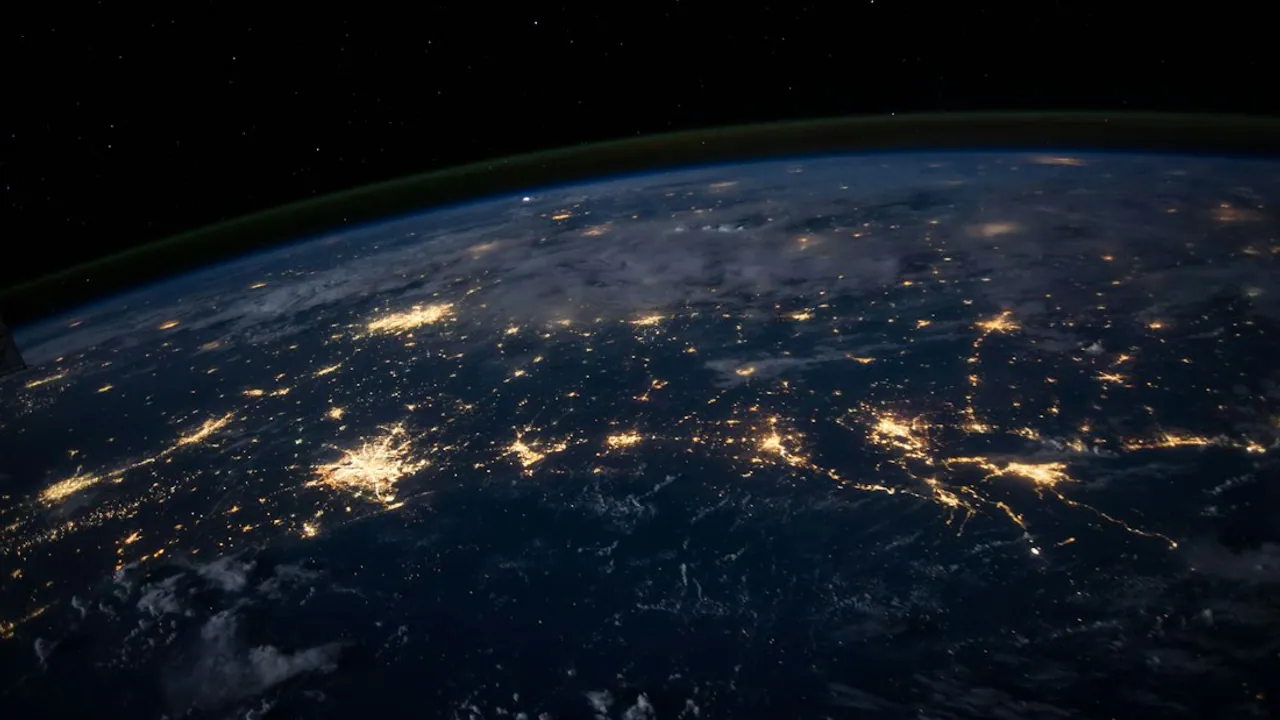
Illustrative news photo · Unsplash / Unsplash ↗
Sources and verification
- Reporting / cross-checkMirage News ↗
- Reporting / cross-checkNASA ↗
Comments
Reader question: What would this energy technology need before widespread use?
No comments yet. Be the first to contribute.
Write a comment
Sample comments and editor reply
Discussion example — not real reader feedback. Names and conversations in this area are fictional. Likes and replies here are not saved and do not count as real engagement.
Example counters: 5,584 reads · 404 likes — not actual analytics
Reading “NASA Launches STEM Challenge Focused on Nuclear Power for Lunar Exploration” raised this question for me: laboratory gains must be compared with commercial scale.
Editor note: Product claims and measured outcomes should be assessed separately. A small pilot with defined metrics is a useful first step.
We should also discuss maintenance cost. An easy rollout does not guarantee trouble-free upgrades.
I would start with a pilot and measurable success criteria rather than assuming a launch means proven value.