Blockchain Model Targets Cross-Border Renewable Energy Certificates: Benchmarks and Limits
A Chinese study combines VDFs, attribute-based encryption and atomic swaps to trace energy certificates, but its benchmark is not yet production evidence.
What the study proposes
Fang Liu of Nantong Institute of Technology in Jiangsu, China, has proposed a blockchain-based model for tracing cross-border renewable-energy trade and environmental or carbon certificates. Published online in the International Journal of Energy Technology and Policy on 9 November 2026, the study aims to verify records supplied by producers, logistics operators, customs agencies and regulators without placing every confidential record in one central database. Rather than operating the physical electricity trade itself, the design acts as an evidence layer that records when information was created, who may inspect it and whether a certificate-like digital asset is transferred consistently between networks.
How the architecture works
The proposal combines four mechanisms. A verifiable delay function links the generation time of a record to its on-chain hash and proof. An improved Byzantine fault-tolerant consensus mechanism is used for a core verification pool. Ciphertext-policy attribute-based encryption limits access according to attributes including country code, regulatory role and enterprise qualification. Finally, a cross-chain atomic swap is intended to ensure that an exchange across two blockchain networks either completes on both sides or does not complete at all. The goal is to reduce hidden alteration, unauthorized disclosure and duplicate use while allowing authorized regulators to inspect evidence.
What the benchmark does—and does not—show
The paper reports an average traceability-query response time of 1.8 seconds at a concurrency level of 200 transactions per second. It also reports a cross-chain atomic-swap success rate above 99 percent during 72 hours of continuous operation. Those figures describe the author’s controlled evaluation, not production evidence from an international energy market. The publisher page does not establish independent replication, an open benchmark dataset, behavior under lost encryption keys or network partitions, or resistance to hostile validators at a national scale. The result should therefore be read as a technical prototype and performance claim, not as an announced deployment.
Why existing certificate infrastructure matters
Europe already transfers Guarantees of Origin through national issuing bodies and the European Energy Certificate System. The Association of Issuing Bodies, which represents 41 government-appointed issuing bodies, says this framework uses Article 19 of the Renewable Energy Directive and the CEN EN 16325 standard to support unique claims and cross-border interoperability. In its 2026 response to the European Commission, AIB argues that fragmentation among overlapping systems creates risks of double counting. A blockchain layer would therefore need to interoperate with established registries and preserve issuance, transfer, cancellation and disclosure rules rather than treating the existing system as absent.
What independent research adds
An independent review published in Humanities and Social Sciences Communications in May 2026 analyzed blockchain and tradable green-certificate research from 2017 to 2025. It identified traceability, transaction matching, market collaboration and intelligent supervision as the main application areas, with smart contracts and cross-chain designs becoming prominent. The review also listed technical standardization, regulatory coordination and international market alignment as unresolved requirements. This does not independently reproduce Liu’s 1.8-second or 99-percent measurements. It shows that the proposed components fit a wider research direction while reinforcing the gap between laboratory architecture and institutionally accepted infrastructure.
What should be tested next
A credible cross-border pilot would need common identifiers and cancellation rules connecting national registries, Guarantees of Origin and carbon instruments. Independent security testing should verify that attribute-based encryption separates commercial and personal data under different national privacy laws. Public tests should also show how atomic swaps recover from network loss, regulatory intervention, incorrect input and key compromise. The study supplies a technically detailed option, but the truth of an energy attribute still depends on meters, accredited issuers and enforceable rules. A tamper-resistant ledger can preserve a false input just as effectively as a correct one; it cannot make poor source data accurate by itself.
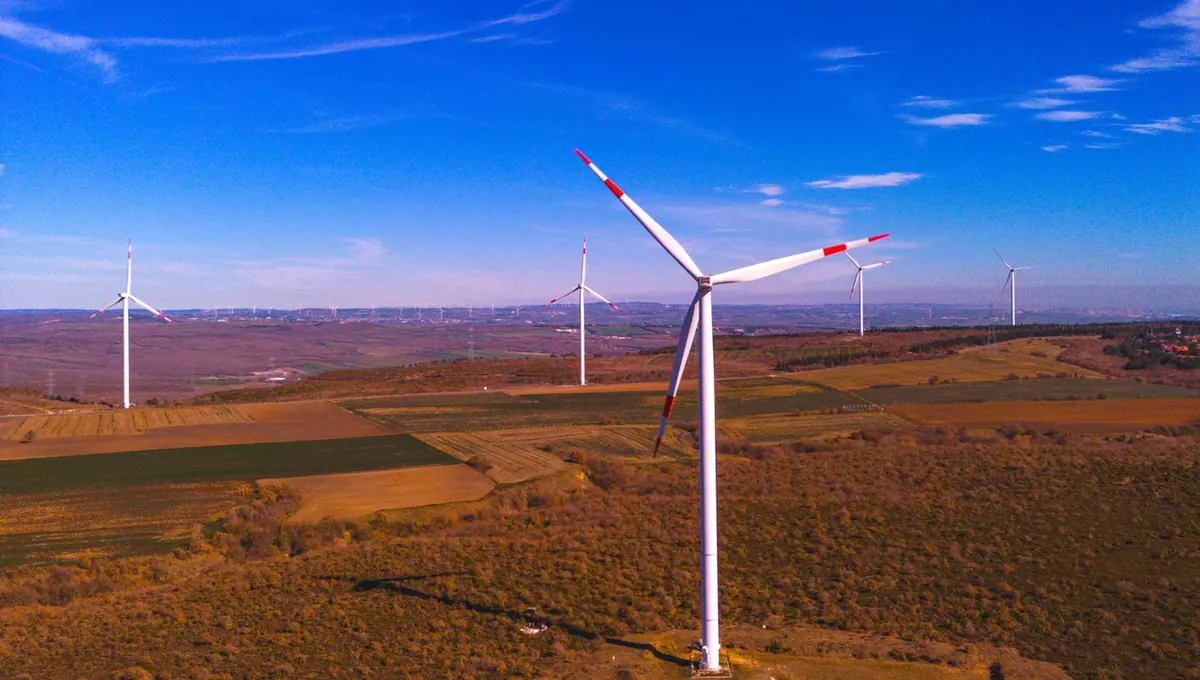
Illustrative news photo · Ali Akdemir / Unsplash ↗
Sources and verification
- Primary sourceInternational Journal of Energy Technology and Policy ↗
- Technical documentAssociation of Issuing Bodies ↗
- BackgroundHumanities and Social Sciences Communications ↗
- Reporting / cross-checkTech Xplore / Inderscience ↗
Comments
Reader question: What would this energy technology need before widespread use?
No comments yet. Be the first to contribute.
Write a comment
Sample comments and editor reply
Discussion example — not real reader feedback. Names and conversations in this area are fictional. Likes and replies here are not saved and do not count as real engagement.
Example counters: 17,319 reads · 639 likes — not actual analytics
Reading “Blockchain Model Targets Cross-Border Renewable Energy Certificates: Benchmarks and Limits” raised this question for me: grid integration deserves attention.
Editor note: Forward-looking claims in an announcement are not the same as established performance results. Further evidence may change the assessment.
It is important to distinguish what the source verifies from projections about the future.
The next version's measurements should be compared with the initial announcement.