AI Virtual Cell Technology: Uncovering Genetic Changes and Drug Effects
Researchers are developing new AI-based virtual cell technologies capable of predicting how genetic changes and drugs alter cellular behavior while uncovering underlying biological mechanisms.
Uncovering Cellular Mechanisms via AI
Current artificial intelligence models can predict if a genetic change leads to disease, but they fail to explain why the disease occurs or how to design effective treatments. Researchers at Texas A&M University's Department of Electrical and Computer Engineering are developing a new AI virtual cell technology to bridge this gap. Led by Dr. Yang Shen, the team aims to predict how genetic and drug effects alter cellular behavior and uncover the underlying biological mechanisms. Their PertReason model has been accepted for presentation at NeurIPS 2026. This system is designed to help scientists understand disease pathways, identify new drug targets, and develop superior medical treatments.
The PertReason Model and Reasoning
While traditional methods often focus on individual biological components, PertReason allows researchers to trace how drugs and genetic changes impact entire genetic cellular networks. Dr. Shen noted that their work is expanding from the molecular level to the cellular level. To ensure AI models are explainable and trustworthy, the team developed the PertReasonQA benchmark. This tool evaluates whether large language models provide correct answers using proper data and logical reasoning. By training AI to reason through biological pathways, the researchers aim to create more reliable predictive models that can assist in complex medical decision-making processes.
Clinical Impact and Personalized Medicine
The research team collaborated with clinical scientists working with breast cancer patients to understand real-world challenges, such as patients developing sudden drug resistance. Dr. Shen emphasized that technical success in numerical metrics must translate into real human impact. The system could reduce trial-and-error in research by prioritizing the most promising biological pathways for investigation. Looking forward, the team plans to utilize Texas A&M's VISION supercomputer to advance these virtual cell models toward creating multiscale digital twins of the human body, ultimately supporting clinicians in delivering personalized medicine and improving patient outcomes.
The Race for Digital Organisms
A competitive landscape is emerging in the development of virtual biology. The Palo Alto-based startup GenBio AI is working on an AI-driven digital organism called AIDO to connect biological information across multiple scales, from molecules to cells. Co-founder Eric Xing envisions a simulator where scientists can introduce drugs or alter genes to predict biological outcomes before physical testing. GenBio is also utilizing AI agents through its AIDO.Builder system to autonomously select modeling approaches and execute code. This technology aims to assist in drug-target prioritization and combination therapy design, potentially revolutionizing early-stage pharmaceutical research.
4D AI Models and Mitochondrial Dynamics
Researchers at the University of California San Diego have utilized 4D lattice light-sheet microscopy to create virtual cells that mimic dynamic biological processes. Using a deep-learning model called MitoSpace, they trained an AI on 40,000 4D movies of drug-treated cells to predict cellular health based on mitochondrial shape. MitoSpace achieved 75% accuracy in grouping drugs by mechanism. Additionally, a physics-based digital twin was constructed to simulate organelle movement. This digital twin successfully reproduced the reduced mitochondrial motion caused by drugs like nocodazole without parameter adjustments, offering a powerful tool for accelerating drug discovery for cancer and Alzheimer’s.
Technical Obstacles and Future Directions
Despite the potential, significant technical hurdles remain, including integrating diverse biological data types and meeting massive computational requirements. There is also a critical need to ensure that virtual cell predictions consistently hold up in physical experiments, as biological responses vary across tissues. To address these complexities, GenBio AI is collaborating with Nvidia to develop virtual-cell world models. The ultimate goal of these technologies is not to replace physical experiments or clinical trials, but to optimize the early research stages by narrowing down the number of drug candidates and biological hypotheses that require real-world testing.
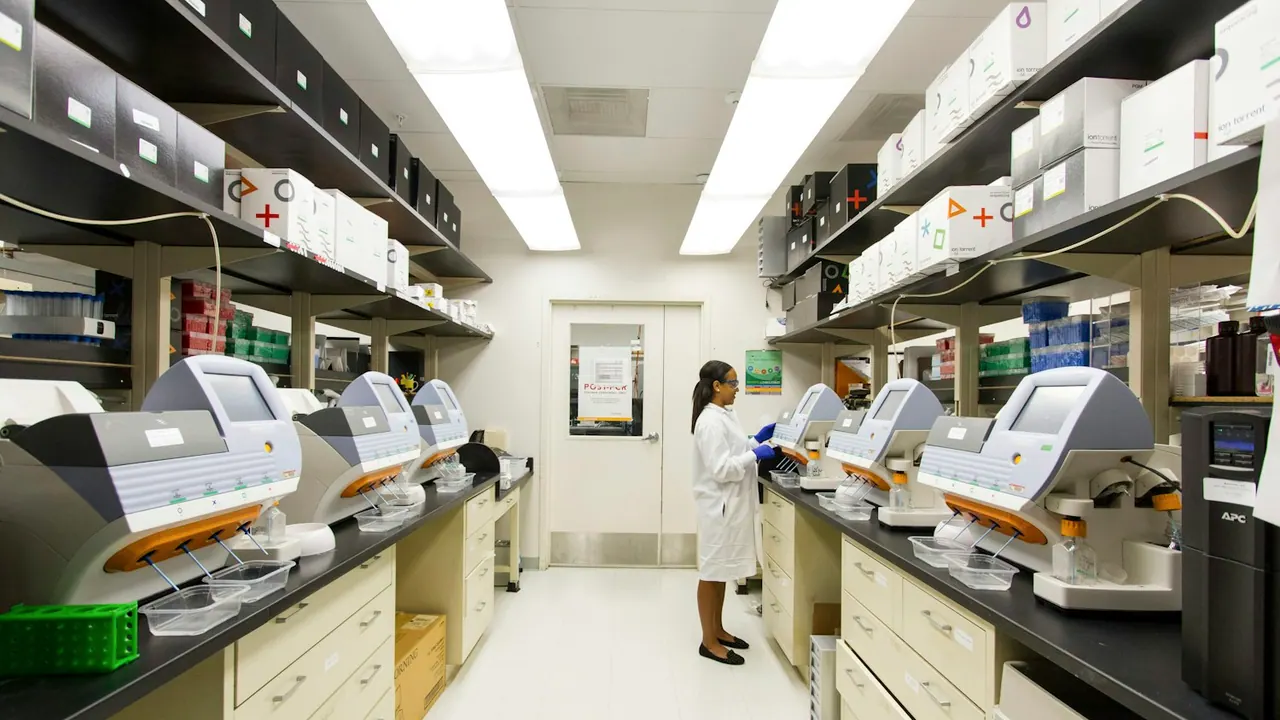
Illustrative news photo · National Cancer Institute / Unsplash ↗
Sources and verification
- Primary sourcearXiv: PertReason ↗
- Reporting / cross-checkInternational Business Times ↗
- Reporting / cross-checkPhys.org Science ↗
- BackgroundPubMed: Virtual cell construction for AI-driven drug discovery ↗
- Reporting / cross-checknewswise ↗
Comments
Reader question: What is your view or technical question about this story?
No comments yet. Be the first to contribute.
Write a comment
Fictional discussion examples and editor replies
Names, opinions, replies and example counts here are fictional, separate from real reader comments and analytics.
Example counters: 18,672 reads · 192 likes — not actual analytics
In “AI Virtual Cell Technology: Uncovering Genetic Changes and Drug Effects”, I would like more detail about what evidence to watch in the next update. Which source supports the point?
To address this, separate observations from assumptions about what evidence to watch in the next update. A measurable trial would help.
For me, long-term maintenance and usage cost is the deciding factor. What independent comparison would help beyond the announcement?
In a pilot or source comparison, I would examine the tangible effect on real users separately. Defining the conditions and evaluation criteria first would help.