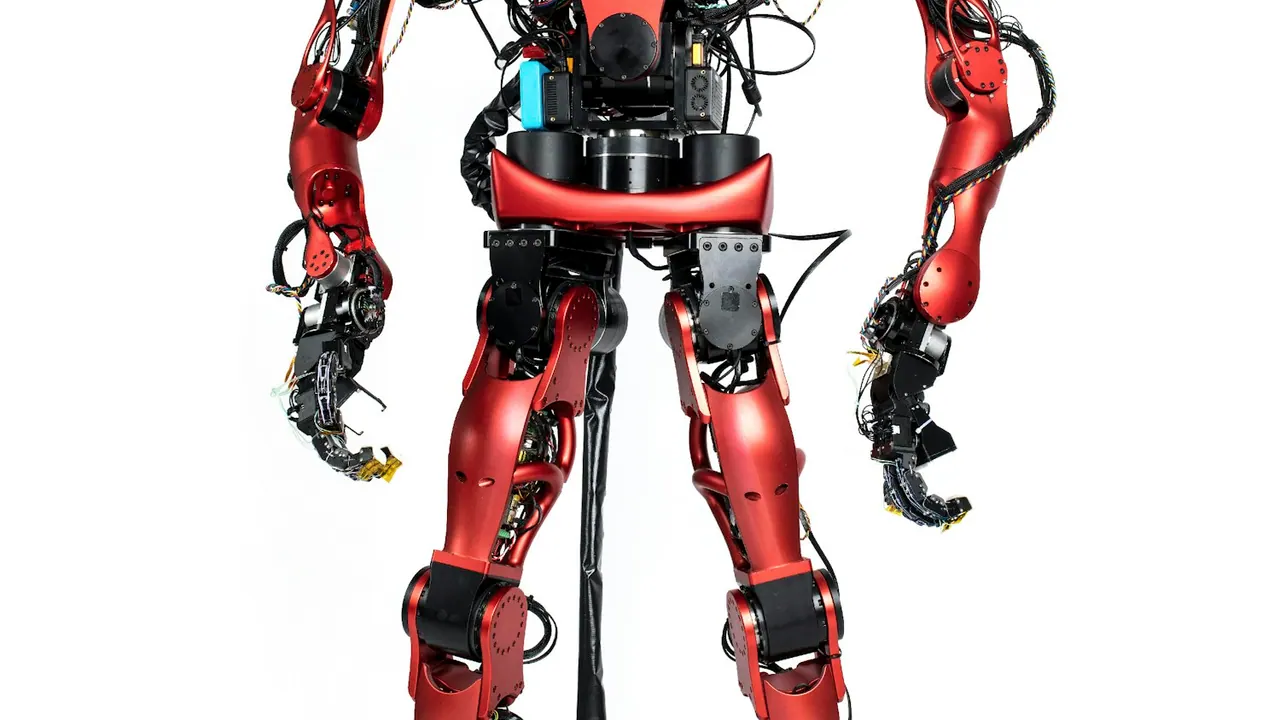
Tesla Optimus enters production: A new milestone for humanoid robotics
Tesla's third-quarter 2026 update says production-quality Optimus units have begun coming off high-volume lines at Fremont. That milestone is meaningful, but it is not the same as verified mass deployment.
From a manufacturing line to a useful worker
Tesla's investor update says Optimus production began in Fremont using high-volume manufacturing lines. The company describes the resulting machines as its first production-quality units, while acknowledging that the hardware and process will continue to change. This is an important manufacturing milestone rather than evidence that large numbers of robots are independently completing complex customer tasks. A reproducible assembly process must eventually be connected to documented deployments, operational safety and measured productivity.
What makes a humanoid useful?
Walking and manipulation demonstrations establish only part of the challenge. A useful robot needs to recognize irregular objects, adjust gripping force, navigate near people and recover when a task changes unexpectedly. Moving a known component under controlled conditions differs fundamentally from performing variable work for a full shift. Perception, planning and motor control must cooperate under strict latency constraints because incorrect commands can have physical consequences.
Measure outcomes, not viral videos
Robust evaluation requires task completion rates, the frequency of human interventions, energy per productive hour, maintenance burden and safe-stop behavior. Manufacturing adds another set of questions: supply chain stability, quality assurance and calibration consistency. For a real business case, total cost per useful task is more important than whether a prototype looks impressive at a trade show.
The software opportunity
Humanoid systems combine perception, simulation, motion planning, robotics middleware and incident analysis. A production team must validate software revisions against sensor loss, dropped objects, unexpected obstacles and power interruptions. Observability and rollback procedures are especially important when software changes operate physical machinery.
What should observers watch next?
The most informative future disclosures would show independent deployment results, sustained task performance and real delivery volumes. First production-quality Optimus units mark a step toward commercialization, but they do not settle the question of when humanoids will be practical across many occupations. This analysis is based on Tesla's October 21, 2026 investor materials.
Source-based editorial coverage. The photo represents the subject and is not documentary evidence of the specific company or event. Photo: Mathew Schwartz / Unsplash ↗
Read at original source ↗