China's humanoid robot race shifts from movement to intelligence
After mastering impressive movement demonstrations, Chinese robot manufacturers are investing in the AI that could make humanoids useful across unfamiliar physical tasks.
Beyond choreography
Robots capable of dancing or performing acrobatics make striking videos, but workplaces demand adaptability. Reuters reported on November 2, 2026 that Chinese manufacturers are shifting their focus toward intelligence for physical interaction. Handling an unfamiliar object, threading flexible material or safely navigating a changing warehouse cannot be reduced to repeating a rehearsed sequence.
What embodied AI actually means
Embodied intelligence links sensors, perception, planning and physical action. A robot must observe the consequences of what it does and revise its behavior. Object weight, friction, grip success and uncertain human movement all matter. Training exclusively on internet text cannot teach every form of manipulation; developers need demonstrations, simulations and physical-world experience.
Investment is not deployment
According to the ITjuzi data cited by Reuters, embodied-AI companies in China raised 93.5 billion yuan across 322 transactions in the first half of 2026, roughly five times the amount a year earlier. This reveals investor expectations, not a measured productivity improvement. Funding can support useful research while still producing prototypes that cannot operate economically outside the laboratory.
The competition for useful data
Learning to open doors, transport objects or handle cables requires varied examples, including failures. Teleoperation, factories and simulated environments provide complementary training data. Simulations have limits, so real-world testing remains essential. The decisive capability may be an efficient pipeline for collecting, validating and reusing physical demonstrations.
How to interpret future announcements
Limited trials in controlled industrial and service settings are plausible; a generally capable autonomous household robot remains a much larger claim. Readers should look for task diversity, intervention rates and sustained safety results rather than a single demonstration video. Source: Reuters, November 2, 2026.
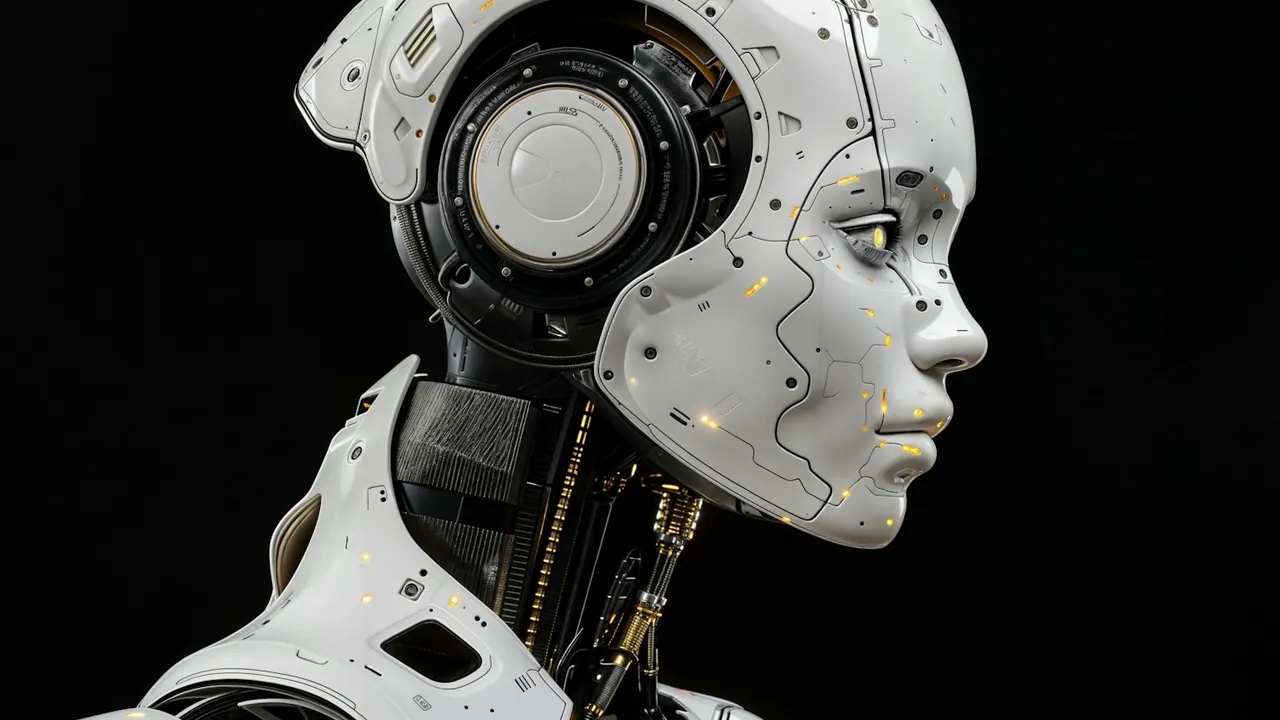
Source-based editorial coverage. The photo represents the subject and is not documentary evidence of the specific company or event. Photo: Gabriele Malaspina / Unsplash ↗
Read at original source ↗