Australia launches CREST Hub to move critical-material separation from lab to industry
The Monash-led CREST research hub will study cleaner ways to separate critical energy materials from ores and end-of-life products. Backed by an A$4 million ARC grant, it is a scale-up and validation program rather than evidence of commercial deployment.
A research hub announced on November 20
The Monash University-led ARC Research Hub for Critical Energy Separation Materials, or CREST Hub, was publicly launched on November 20, 2026. Voice of ASEAN reported the launch that day and described a collaboration between universities and industrial partners. The Australian Research Council's official IH25 selection report independently records that the project was selected in 2025, names Monash as the administering organization and assigns A$4 million in ARC funding. Those dates describe different events: 2025 is the selection and funding year, while 2026 is the date of the current launch report. The hub should therefore be understood as a research, pilot and scale-up program, not as evidence that a new commercial processing plant is already operating.
Membranes, greener solvents and end-of-life recovery
CREST's official research page organizes its work around storage, transport, utilization, and impact and integration. The technical portfolio includes membranes intended to separate valuable components from ores and recycling streams, greener solvents that could replace more burdensome extraction chemistry, cleaner lithium harvesting, and recovery from end-of-life electric-vehicle components. It also lists hydrogen transport through green ammonia, fuel-cell deployment, lower-carbon silicon and recovery of material from mining waste. These projects are not all at the same technology-readiness level. The hub presents them as a research portfolio; its pages do not establish that every method has already been validated at commercial scale or has proven a cost advantage over existing processes.
How the university-industry consortium is structured
The hub's people page lists Monash University, the University of Technology Sydney, UNSW, Edith Cowan University, Victoria University and the University of Texas at Austin. Its industry partners are ElectraLith, Element Zero, EPE, EcoMag, Envirostream and Opal. The ARC's 2025 selection report names Professor Matthew Hill as Hub Director, while the current CREST people page lists Dr Gagan Kaur in its management section. The records may reflect governance at different dates, so this report does not merge the two entries into one role. A central test will be whether academic separation performance can be repeated with partners' real ores, waste streams and operating conditions rather than only controlled laboratory samples.
Where independent reporting and institutional claims differ
The regional report is signed by VOICE OF ASEAN rather than an individual author, and the page does not specify a publication country; it presents the outlet as focused on ASEAN and Southeast Asian affairs. It reports the November 20 launch and summarizes the research agenda. The ARC and CREST pages are primary documents for funding, partners and work packages. AZoM's dated coverage is explicitly based on material supplied by Monash University, so we treat it as an additional record of the institution's position, not independent confirmation. Capacity or timetable statements from industrial partners are likewise targets. They should not be reported as achieved environmental benefits until pilot data, peer-reviewed results or independent lifecycle analysis are available.
The measurements that should define success
The hub's impact will be clearer through comparable measures such as separation selectivity, recovery yield, energy and water use, solvent loss, product purity and total cost per tonne, rather than simply the number of projects it starts. Moving from a laboratory sample to variable ores or electronic waste can introduce membrane fouling, pretreatment demands and new waste-management burdens. Future reporting should look for pilot-scale results, disclosed baselines, independent verification methods and lifecycle emissions. For Australia, the strategic objective is not only to extract critical materials but also to retain more processing knowledge and manufacturing value. The launch does not prove that outcome; it establishes a program whose progress can now be measured against it.
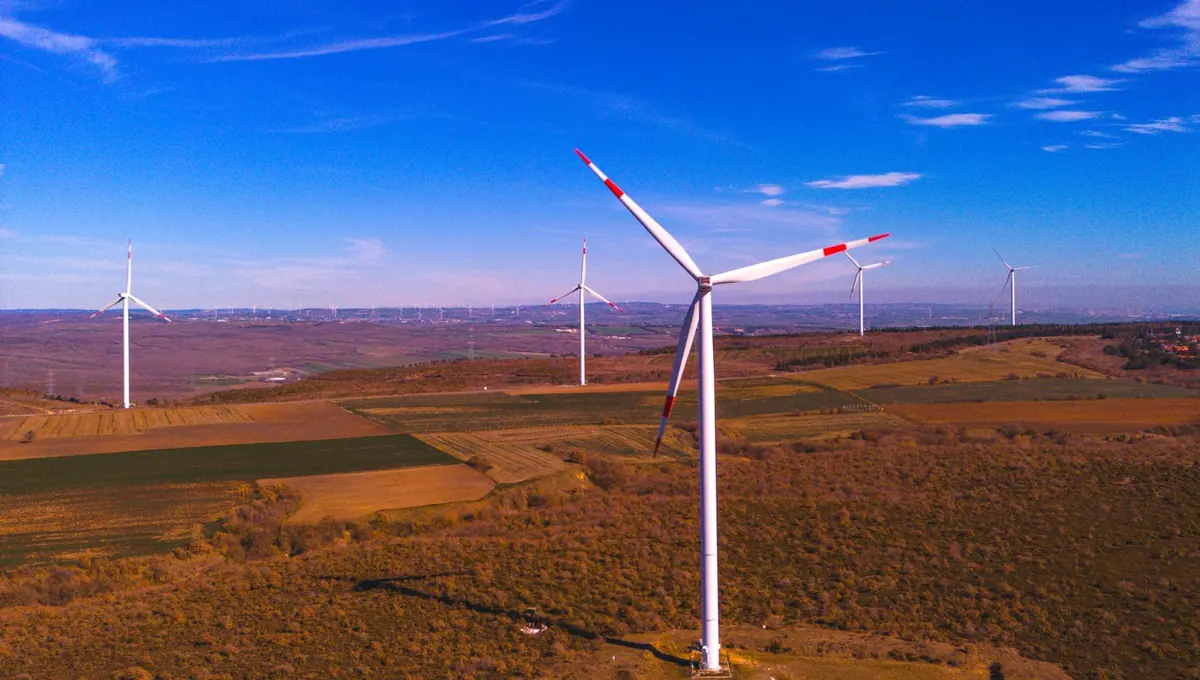
Illustrative news photo · Ali Akdemir / Unsplash ↗
Sources and verification
- Primary sourceARC CREST Hub — People and partners ↗
- Primary sourceARC CREST Hub — Research ↗
- Primary sourceAustralian Research Council — IH25 selection report ↗
- Reporting / cross-checkAZoM — Monash-supplied coverage ↗
- Reporting / cross-checkVoice of ASEAN ↗
Comments
1 commentsReader question: What would this energy technology need before widespread use?
Write a comment
Fictional discussion examples and editor replies
Names, opinions, replies and example counts here are fictional, separate from real reader comments and analytics.
Example counters: 8,428 reads · 148 likes — not actual analytics
In “Australia launches CREST Hub to move critical-material separation from lab to industry”, I would like more detail about uncertainty around commercial rollout timelines. Which source supports the point?
To address this, separate observations from assumptions about uncertainty around commercial rollout timelines. A measurable trial would help.
In “Australia launches CREST Hub to move critical-material separation from lab to industry”, I wanted a concrete example about separating capital cost from maintenance cost. Would the same assessment hold in another environment?
I see the upside, but how efficiency changes when production scales may introduce hidden costs. A checklist before adoption would be useful.
Editoryal soru / Editorial question: Kritik malzeme projelerinde önce hangi ölçüm açık yayımlanmalı—geri kazanım oranı, enerji tüketimi, yaşam döngüsü emisyonu veya ton başına maliyet? Which measure should critical-material projects publish first—recovery yield, energy use, lifecycle emissions, or cost per tonne?